Nature as a weapon, human bodies as a resource

In June 2023, the Kakhovka dam was blown up in Russia's war of aggression against Ukraine, flooding an estimated 100 square kilometers and killing dozens of people. While the disaster quickly disappeared from the media, the affected area suffers from long-term ecological consequences. Large areas of land will be unusable for agriculture for years to come, and the same goes for the polluted groundwater. Blowing up the dam was just one of the most prominent recent examples of how the destruction of nature is deliberately used as a weapon to weaken an opponent durably .
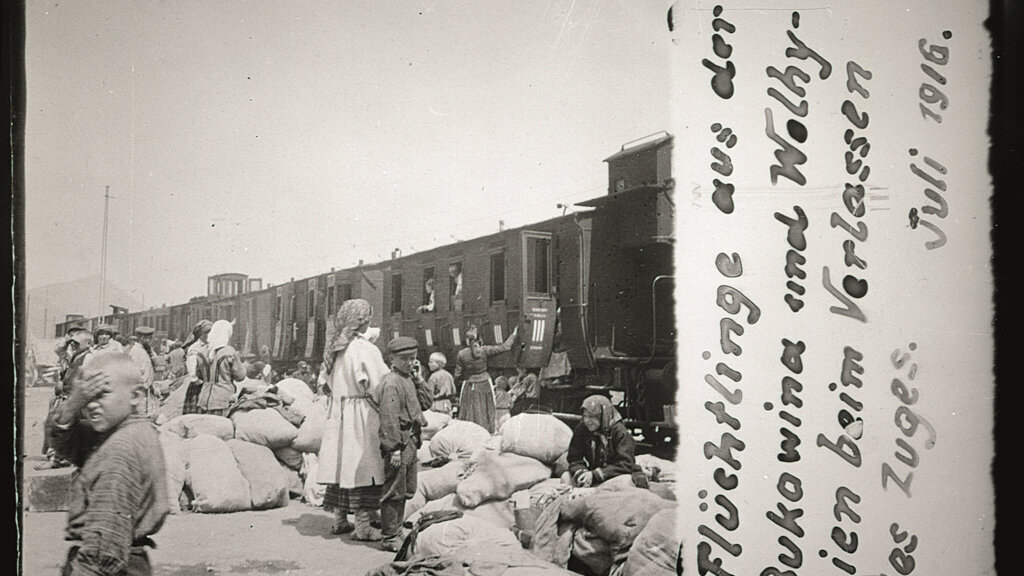
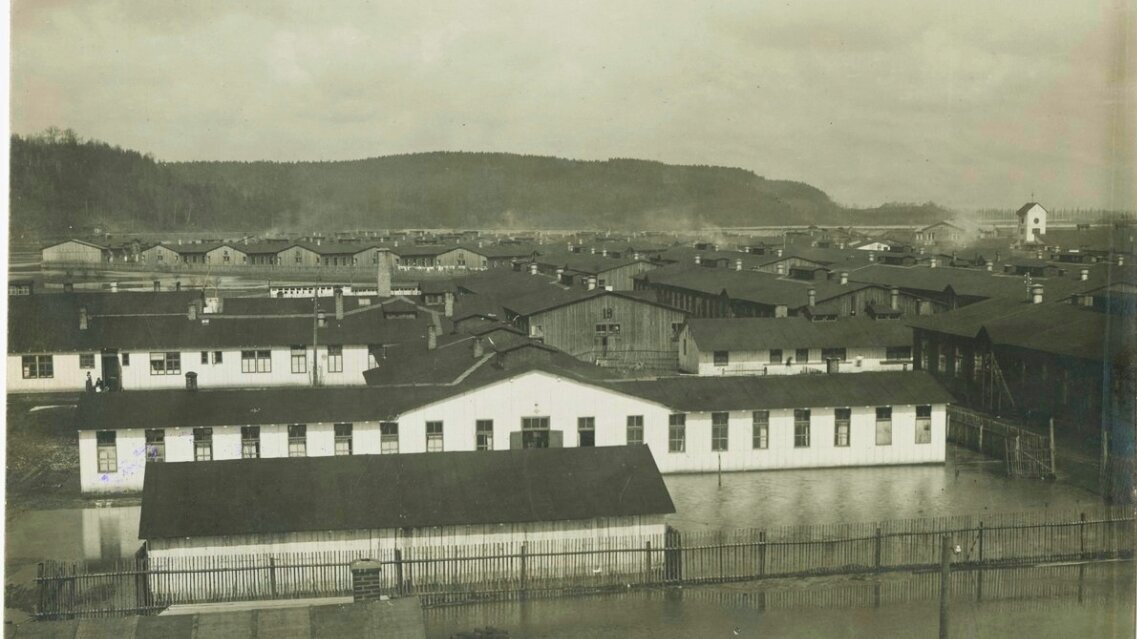
Such instrumentalization of nature for the purposes of war has a long history. In World War I, which was marked by industrial warfare and the mobilization of all resources, the phenomenon reached a new level. Dams were built on the Eastern Front, thus flooding vast fertile surfaces and contaminating the groundwater, and oil fields were set on fire. The destruction of the environment exacerbated civilian suffering and led to enormous refugee movements. The systematic destruction of nature on battlefields and in the hinterland at that time is one of the starting points of the FWF-funded project “Forging Wartime Biopolitics: Refugees and Environment in World War I“.
In their international project, Kerstin von Lingen from the University of Vienna, Oksana Nagornaia from Humboldt University in Berlin, and Kamil Ruszala from the University of Krakow are the first to link the history of war-related mass displacements to medical and environmental history. Their study centers on how wars affect the natural environment and how military interests override human needs. “The deliberate destruction of nature was particularly pronounced on the front lines between the Habsburg Empire, the German Empire, and the Russian Empire. We relate this phenomenon to the concept of biopolitics, which looks at state control and the optimizing of human bodies. To give one example: the risk of epidemics resulting from the destruction of nature was countered with large-scale vaccination campaigns,” explains historian Kerstin von Lingen.
Forging Wartime Biopolitics
To hinder the advance of Russian troops in Galicia, the Austro-Hungarian armed forces employed a scorched-earth strategy. An international team of researchers is examining the impact of the systematic destruction of villages and infrastructure, as well as forced displacement, using World War I as a case study.
Exercising power through biopolitical control of human life
As a central concept in the project, the notion of biopolitics goes back to philosopher and sociologist Michel Foucault, who uses it to describe a paradigm shift in the modern way of exercising power. It is no longer all about autocratic rulers presiding over the life and death of their subjects, but more about a modern biopower that intervenes in the biological and social processes of human life, for instance by way of the health care system, in order to create new norms. Subsequent criticism of Foucault’s theoretical construct made it clear, however, that biopolitical standardization affects people differently depending on gender and ethnicity – an aspect that is also addressed in the project.
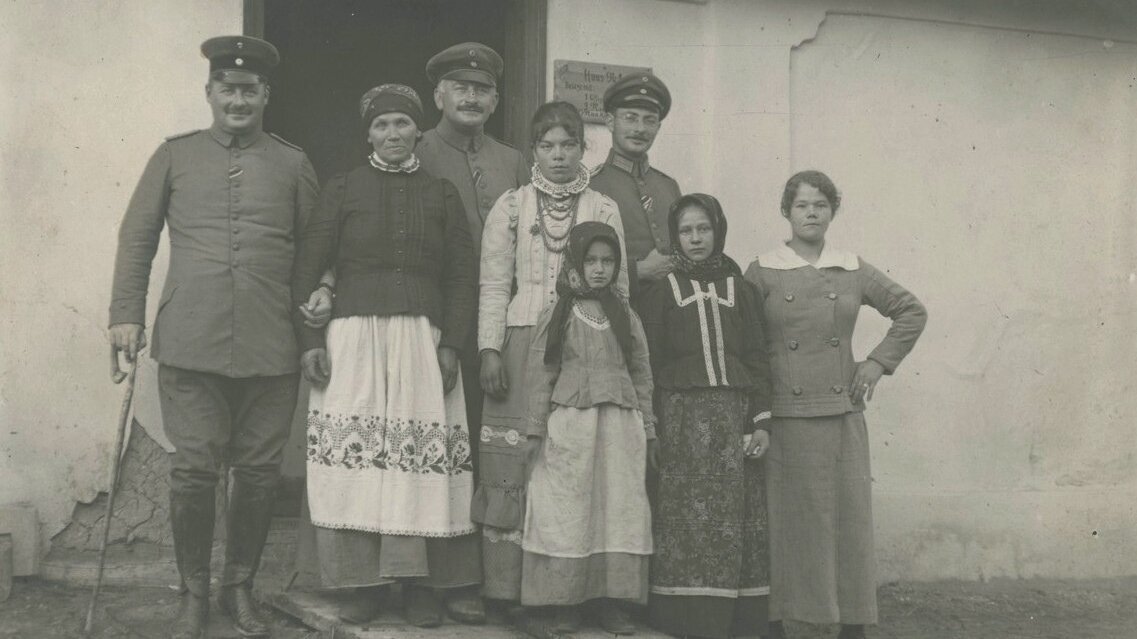
“Traditionally, studies of this kind have been focusing on World War II. But we want to identify longer-term development trends in biopolitical approaches that originated in modern wars and colonial wars,” Nagornaia notes. “World War I, a time when the medical profession gained great authority, provides a particularly vivid example in this context.” The warring parties brought an anti-Semitic and racist world-view to the multi-ethnic regions of the East. The local civilian population was often considered underdeveloped, and the administration engaged in arbitrary and violent action. The colonial order also included compulsory medical measures such as vaccination or delousing of the population. “The First World War was also a war of physicians. The role of military physicians on the Eastern Front has hardly been researched to date,” reports Nagornaia.
Refugees and Environment in World War I


Systematic destruction of nature in Galicia
In addition to Congress Poland and Romanian Wallachia, which were under the rule of the Russian Tsar prior to the First World War, the areas studied also include what was then Habsburg Galicia – a region that is now part of Ukraine and once again in the throes of battle . “The three huge armies that fought on the Eastern Front left enormous scars on the landscape simply because of their own needs for supplies. Primeval forests in Poland and Belarus were completely decimated and burned for fuel. That led to the disappearance of the last wild wisents, also known as European bison,” explains Nagornaia. “We want to take a closer look at the traces left behind by war logistics, but also by the deliberate destruction of resources informed by a 'scorched-earth policy'.”
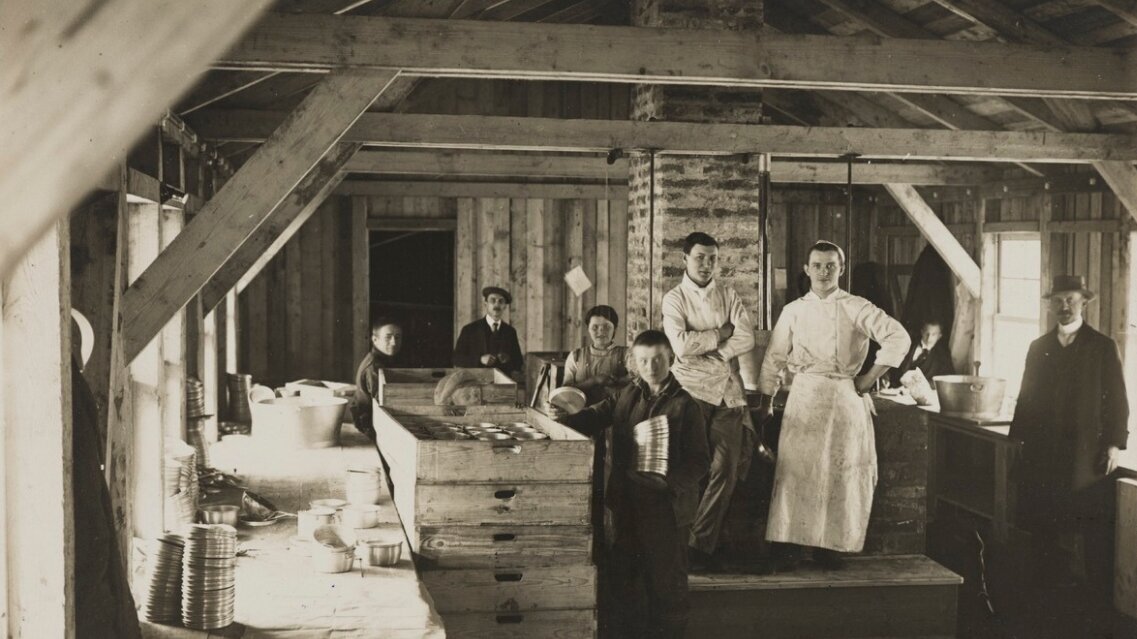
The researchers have set out to map the data and reports on destruction and refugee movements from various archives on digital maps using geoinformation systems (GIS) as part of a digital humanities approach and match them with military map material and locations of compulsory medical measures such as vaccination campaigns. Image material and visual sources also play an important role in this context. “It helps us, inter alia, to learn more about the lives of so-called silent communities. These silent, often illiterate, majorities or marginalized groups play a major role in our focus on everyday history and experiential history, but in many records they hardly feature,” says Nagornaia.
Refugee women on burnt oil fields
The Vienna War Archives, a historical collection of the Austrian State Archives, hold images illustrating the compulsory labor service of refugee women in what was then Romania. During their retreat, the British and Russian armies set fire to the oil production facilities located there. “The German and Austrian administrations conscripted these women to shovel away the remaining sludge. From the military's point of view, that made sense, because the men had all been deported or mobilized for war purposes,” says Nagornaia. “This practice was not an isolated case. Women from the civilian population were also used during floods and dam construction in Galicia.” Women's bodies, like men's, were reduced to the physical use to be drawn from them and acted as tools of warfare.
The analysis of how the natural environment and human bodies were treated during World War I is more than just a historical investigation. Given what we see at present, such as climate change, ecocide, and technologically driven wars, this research creates a better understanding of the interconnections of conflicts, migration crises, and environmental disasters. The wounds of war leave their mark not only on societies, but also on landscapes for decades to come.
About the researchers
Kerstin von Lingen is a professor of contemporary history (comparative dictatorship, violence, and genocide research) and a board member at the Department of Contemporary History at the University of Vienna. Her research inter alia focuses on military and violence history, global migration and forced labor , as well as post-war justice. Earlier stages of her career saw her in positions at the University of Heidelberg and Tübingen. Visiting professorships have taken her to the ULB Brussels, the Lauterpacht Center for International Law in Cambridge, and the University of Basel.
Oksana Nagornaia is a research associate at the Institute for Historical Studies at Humboldt University in Berlin and a visiting professor at the Institute for Eastern European History at theniversity of Vienna in 2026. Her research focus includes environmental history and the history of the First World War. Set to run from 2026 to 2028, the project “Forging Wartime Biopolitics: Refugees and Environment in World War I” receives EUR 401,000 in funding from the Austrian Science Fund FWF in the context of the European Weave program.
Publications
Militarized Landscapes, in: Oxford Bibliographies in Environmental History. New York: Oxford University Press 2026
Embattled Nature: Soldiers, Civilians, and Landscapes on the Eastern Front of the Great War. An Introduction, in: The Great War and the Anthropocene: Empire and Environment. Soldiers, Civilians, and Landscapes on the Eastern Front. Brill 2025
Besetzte Umwelt: Natur und Raum im Ersten Weltkrieg – Galizien und Bukowina, in: Vierteljahreshefte für Zeitgeschichte, 72/3, 2024
Conflict Landscapes of the Great War: The Spatial and Ecological Dimension of Military History, in: Quaestio Rossica, 11, 2; 2023